Holding Complexity: Identity, Character, and the Practice of Belonging
Health, Safety, and Well-being
July 19, 2026
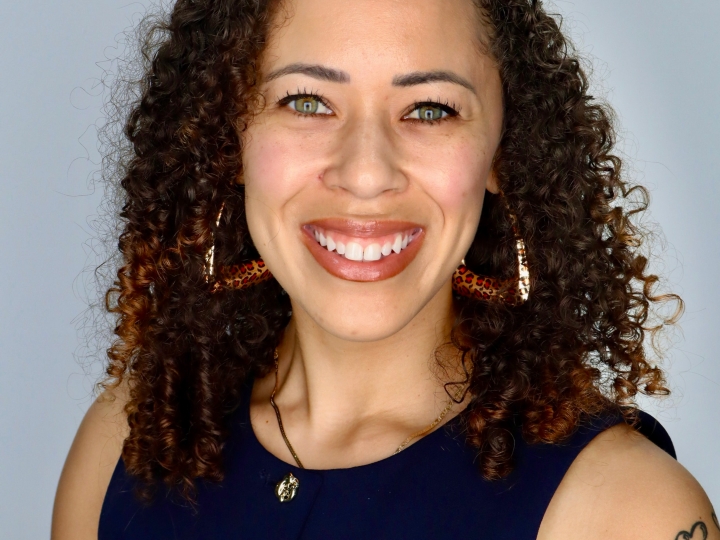
I have spent my entire adult life in higher education. I began working in student affairs at 19 while finishing my final year of college at Iowa State, and I held my first higher education internship at 20. Those years were critical for me as I learned what a career in higher education could be, but because I was so young, I simultaneously learned who I was. The journey of discovering and accepting my identities as a human has never been separated from my journey of discovering my identity as a professional. Identity is the throughline for how I see this field, our students, and my colleagues.
I remember asking myself questions early in my career that did not feel theoretical at the time:
-
Did they disregard my idea because it was bad, or because I am young?
-
Why does my brain operate differently than everyone else’s?
-
Did I get the promotion because I’m the best, or because I’m Black?
-
Is being direct polite, or impolite? Does politeness matter?
Now, as a Dean of Student Affairs, I oversee areas that sit at the intersection of identity and belonging: CARE, student conduct, residence life, engagement and belonging, disability services, Title IX, and student leadership. I am directly responsible for creating systems that equitably respond to harm, support well-being, and increase sense of belonging across the campus.
Identity Is Not a Category; It Is Context
In higher education, we often consider identity as a category: race, ethnicity, gender, sex, disability, religion, age, first-generation status, veteran status, etc. I appreciate a category as much as any higher education administrator, and I recognize their importance in receiving funding, directing resources, and naming inequities within the field. However, when we reduce identities to categories, they flatten individuals’ lived experiences.
When I think of identity, it’s not a category to be sorted into, but also a tool to provide context.
-
It shapes how my words are received before I finish speaking.
-
It influences whether my leadership is read as decisive or difficult.
-
It determines whether my needs are seen as legitimate or inconvenient.
So, identity is not just who I am–it is what the environment does with who I am. Whether right or wrong, social norms directly connect identity to character. Thus, character development must also be examined in the systems, expectations, and power dynamics of our campuses, classrooms, and offices.
The Myth of Professional Character
Professional character is often described using terms like accountable, resilient, timely, integrous, respectful, and eloquent. But where do those terms originate from, and who defined them? Dominant cultural norms, with a clear line to identity, defined professionalism. Those same norms define appropriate behavior and appropriate attire, and then connect them back to character after the fact. Character is filtered through bias. The terms are so entangled that it is difficult to determine where one begins and the other ends.
I see this in conduct processes and CARE referrals, in classrooms, and in email exchanges:
-
A BIPOC or neurodivergent student expressing frustration is labeled disruptive rather than distressed.
-
A staff member advocating for equity is seen as escalatory rather than principled.
-
A woman leader who communicates directly is described as rude, while a cisgender male leader is described as effective.
-
A housing-insecure student missing class is seen as lazy or uncommitted, rather than being given resources to arrive in class clean, fed, and on time.
If we are to move forward as a field towards equity, it is time to consider:
-
Whose definition of character are we using?
-
Who benefits from those definitions?
-
Who is disciplined for not aligning with them?
Character cannot be considered outside of the context in which it is determined.
Autism, Perception, and Misalignment
As an Autistic professional, I have spent much of my life navigating misalignment between intent and perception. If you’ve read my work, or interacted with me in any way, you know four things:
-
I value clarity.
-
I require structure.
-
I communicate directly.
-
I process information differently.
It took me many years to understand that none of these traits are deficits, and it will take me many more to teach others the same. In professional environments that rely on unwritten rules, indirect communication, and small talk for political success, my Autism is often misinterpreted as disrespect, disinterest, or lack of care.
As character is connected to context, behavior is connected to bias. There is not a person today who does not interpret behavior through bias. Those same traits mentioned above are rewritten as rude, rigid, disengaged, and unempathetic.
The risk to higher education if we fail to account for neurodiversity is significant. Bias can lead to conflating difference with deficiency, and that misalignment can spread across campuses. Each identity intersects with the next–race, gender, neurodiversity–and the interpretations of each are subconsciously combined. If we add direct communication to an Autistic neurotype and put it inside the body of a Black woman, like me, the context shifts, the behavior shifts, and the bias shifts. Then the direct communication isn’t just a personality trait, or a result of being Autistic, it’s filtered through the stereotype of the Angry Black Woman (Marion & Wilson, 2023; Motro et al., 2022). People typically want identity to fit into a single box, or set of boxes, so that each person can be categorized and resolved. But we cannot reduce people to understand them. When we push for simplicity, we miss the opportunity for deeper character work; the kind that requires holding tension without rushing to closure.
Belonging as an Antidote for High Turnover and Low Enrollment
Identity and character are more than just perception, they are the foundation of belonging and, ultimately, who remains within our institutions. We often talk about belonging as if it is an added value–or in some way supplemental–when instead it is foundational. I see every day how identity shapes belonging and how belonging shapes whether people stay. Higher education today is about survival, and survival is not enough to sustain students, faculty, or staff.
Bettina Love’s call for students to experience more than mere survival, to move toward freedom (2019), should be the lighthouse we swim toward. It has been nearly 15 years since Terrell Strayhorn published his seminal work on how belonging is associated with persistence and retention, particularly for BIPOC and low-income students (2012), and we still struggle as a field to increase sense of belonging on our campuses.
The research is clear (Strayhorn, 2012, 2023):
-
When people feel seen, valued, and supported, they persist.
-
When people do not feel seen, valued, and supported, they leave.
Understanding identity and character development leads to understanding how to improve belonging. When we improve belonging on our campuses, we will have the antidote for low student enrollment and high employee turnover.
Three Things We Must Do Differently
If we want to align our work with the mission of developing identity and character in meaningful ways, there are three things we need to do.
1. Practice Contextualized Accountability
-
Interpret behavior within cultural, social, and neurological contexts.
-
Distinguish between harm and difference.
-
Ensure processes are equitable, not just consistent.
2. Expand Norms, Don’t Just Enforce Them
-
Examine who was centered when norms were created.
-
Question whether expectations reflect inclusion or assimilation.
-
Adjust institutional practices to reflect a broader range of ways of being.
3. Lead With Reflection
-
Ask how your identity shapes your perspective.
-
Notice where bias may influence interpretation of behavior.
-
Create space for complexity rather than reducing it.
What This Looks Like in Practice
Across the areas I oversee, this work is not theoretical; it shapes decisions every day.
-
In CARE, it sounds like asking what is causing a behavior before labeling it.
-
In conduct, it requires pausing to distinguish between disruption and distress.
-
In residence life, it looks like building communities that do not require assimilation to belong.
-
In disability services, it means reinforcing that access is a right, not a negotiation.
-
In Title IX, it requires creating processes where students feel safe enough to come forward.
-
In student engagement, it is about learning to view leadership holistically.
Through each process, I ask myself: Who gets to belong here as they are?
A Call to Higher Education Practitioners
If we want the world to believe again in the transformative power of higher education, we must actively engage in understanding identity as a foundational component of character development and a sense of belonging.
There are a few places to start:
- Move beyond surface-level inclusion and examine lived experiences.
- Name and address the gap between policy and practice.
- Center belonging as essential to retention and success.
- Model how to navigate complexity rather than avoid it.
As we move through summer bridge programs, fall orientation planning, and the start of the semester, I hope we continue to ask ourselves: Who gets to belong here as they are? And then make continual adjustments to ensure the answer is “everyone.”
References
Love, B. L. (2019). We want to do more than survive: Abolitionist teaching and the pursuit of educational freedom. Beacon Press.
Marion, L. L., & Wilson-Jones, L. (2023). Higher education leaders’ perceptions on the angry Black woman syndrome. Journal of Research Initiatives, 7(3).
Motro, D., Evans, J. B., Ellis, A. P. J., & Benson, L., III. (2022). Race and reactions to women’s expressions of anger at work: Examining the effects of the “angry Black woman” stereotype. Journal of Applied Psychology, 107(1), 142–152. https://doi.org/10.1037/apl0000884
Strayhorn, T. L. (2012). College students’ sense of belonging: A key to educational success for all students. Routledge.
Strayhorn, T. L. (2023). Widening the aperture on college students’ sense of belonging: A critical ecological perspective. In T. Lowe (Ed.), Advancing student engagement in higher education: Reflection, critique and challenge (pp. 251–261). Routledge. https://doi.org/10.4324/9781003271789-23