2026 NASPA Emergency Aid Landscape Analysis - Cover

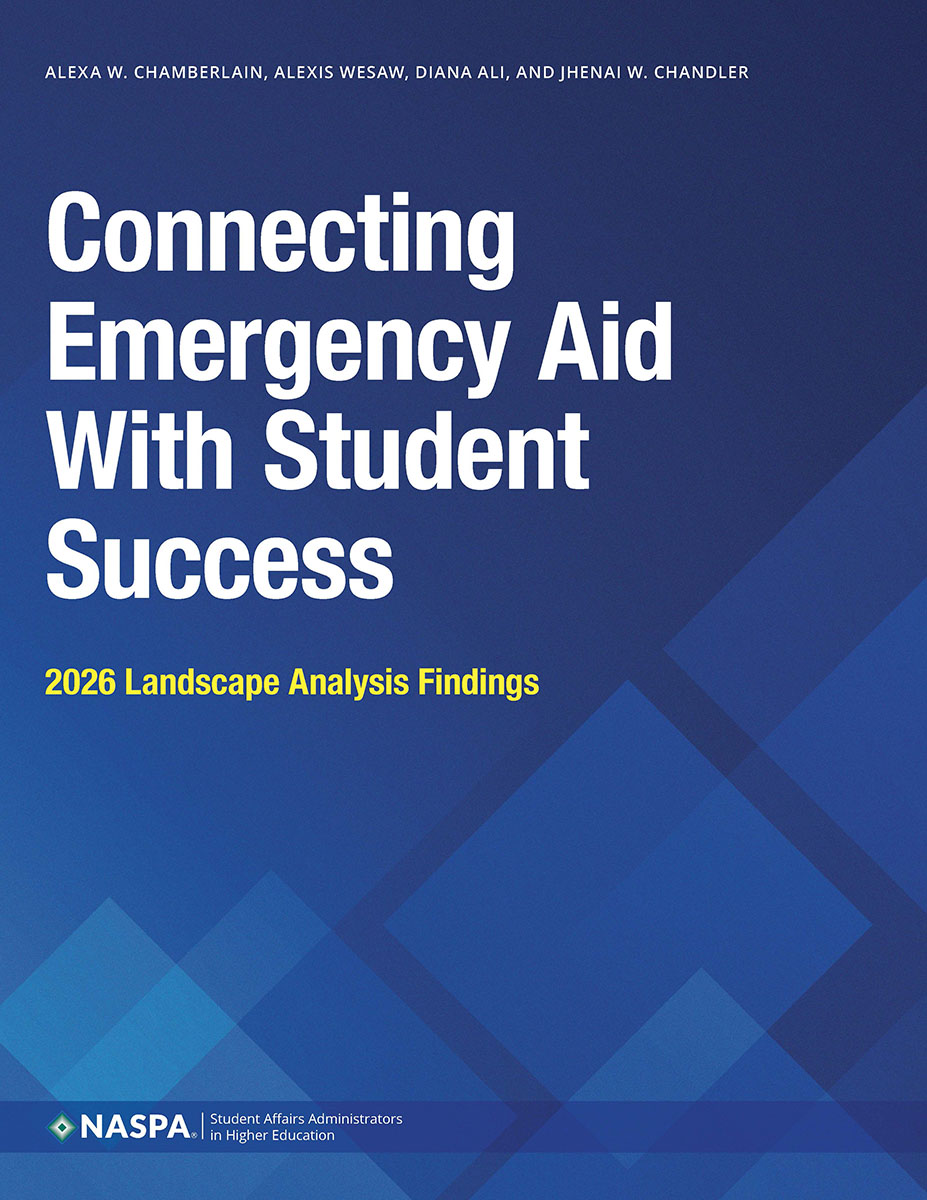
Connecting Emergency Aid With Student Success: 2026 Landscape Analysis Findings

October 14, 2026

Emergency aid serves as a timely, targeted intervention that can help students navigate unexpected financial disruptions. It can also be a critical entry point for students to receive broader well-being and basic needs support, find campus community, and access additional resources. Connecting Emergency Aid With Student Success: 2026 Landscape Analysis Findings draws on national survey data to offer a current snapshot of emergency aid operations and practices to support professionals in the development or advancement of programs. 
 

Overview

Connecting Emergency Aid With Student Success: 2026 Landscape Analysis Findings draws on survey responses from 194 administrators with emergency aid programs in place at their institutions. Building on a baseline understanding from NASPA's 2016 landscape study, this updated research provides a current look at the state of operations and practices around emergency aid today. Findings provide student affairs practitioners and leaders with a current snapshot of emergency aid operations for benchmarking and strategic planning, highlight emerging practices for consideration, and identify key areas of need for additional research and resources. This report also features a state policy scan of related legislation to inform possible advocacy levers and sources of external funding.

Several research questions guided this research:

  • How are student affairs professionals structuring and sustaining emergency aid programs?
  • What practices support coordinated and student-centered emergency aid delivery?
  • How are institutions demonstrating the impact and value of emergency aid?
  • What challenges do student affairs professionals face in improving and expanding emergency aid efforts?
  • How are institutions leveraging emergency aid to connect students to longer-term support services?


Contact: Please share any questions or feedback about this research with [email protected]

Findings


Finding 01


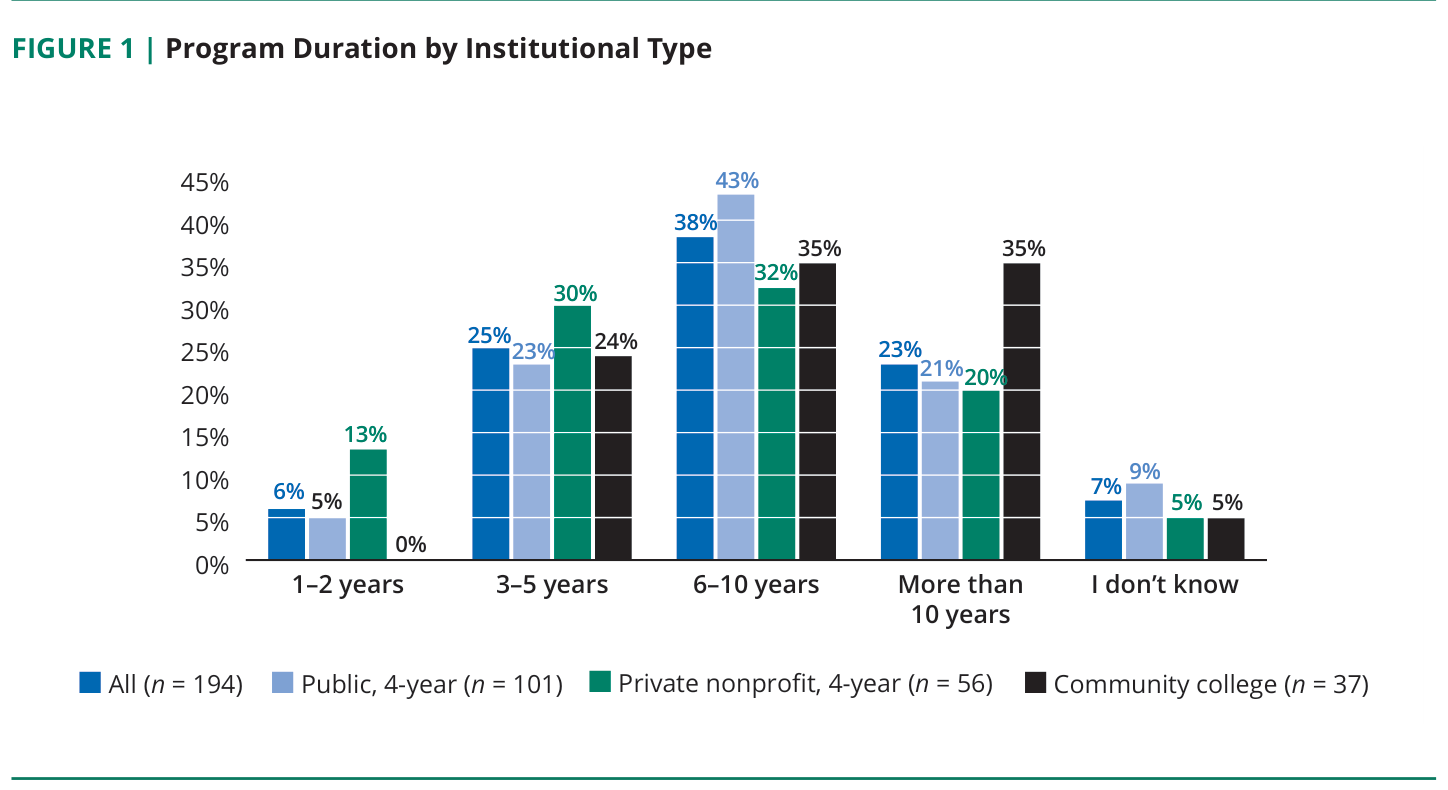
86% of all institutions, and 94% of community colleges, have had an emergency aid program for three or more years.

Figure 1: Program duration by institutional type

Finding 02


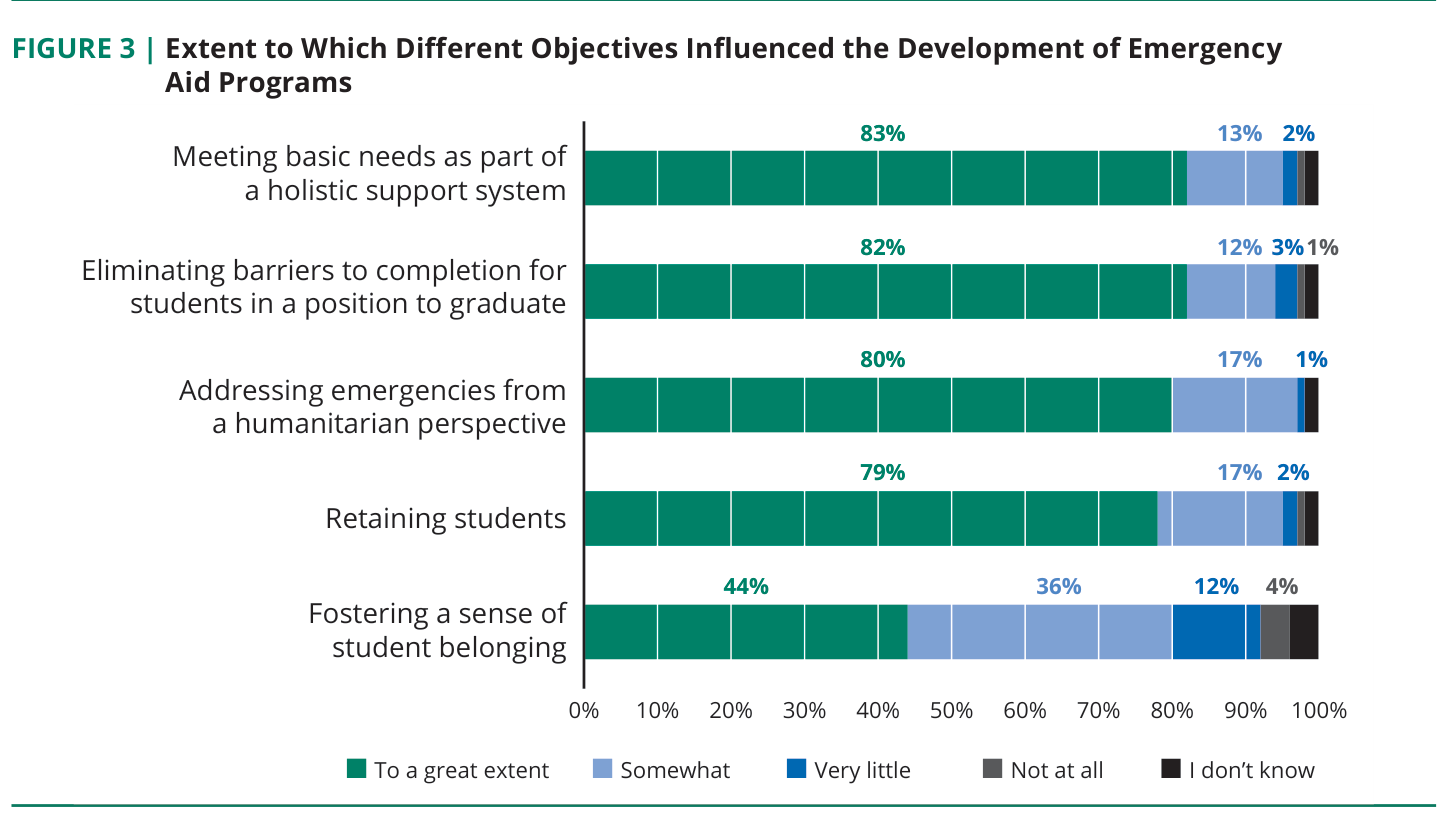
41% of colleges include addressing students’ basic needs through emergency aid in their strategic plan.

Figure 3: Extent to which different objectives influenced the development of emergency aid programs

Finding 03


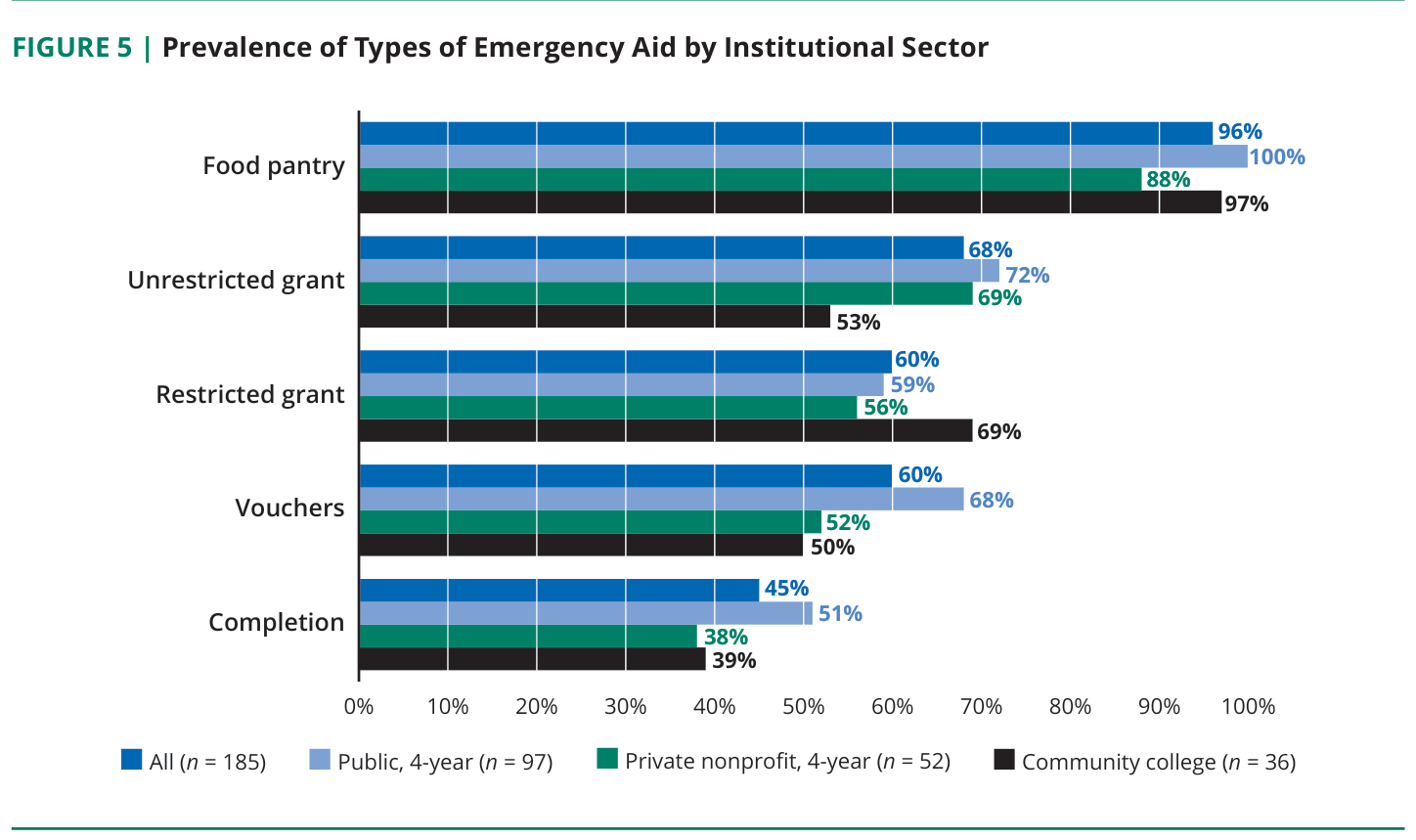
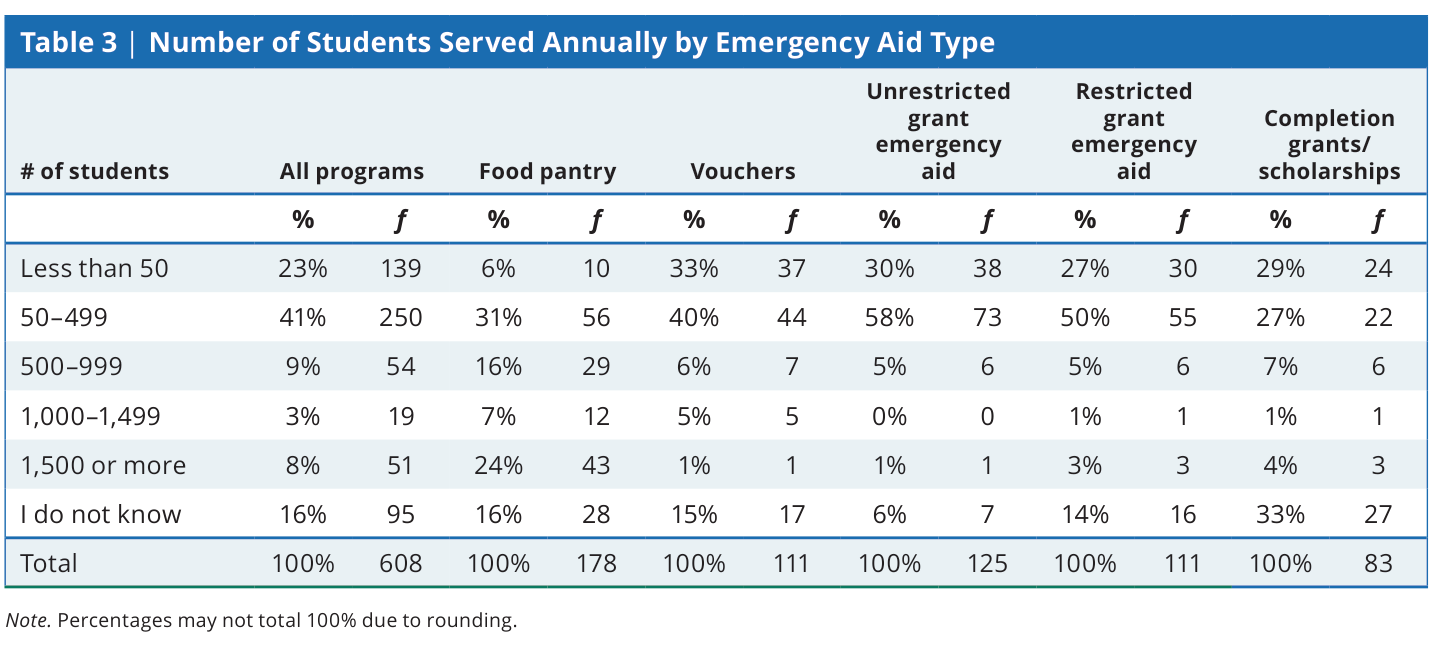
76% of colleges offer three or more types of emergency aid and 96% have a food pantry. 

Figure 5: Prevalence of types of emergency aid by institutional sector
Table 3: Number of students served annually by emergency aid type

Finding 04


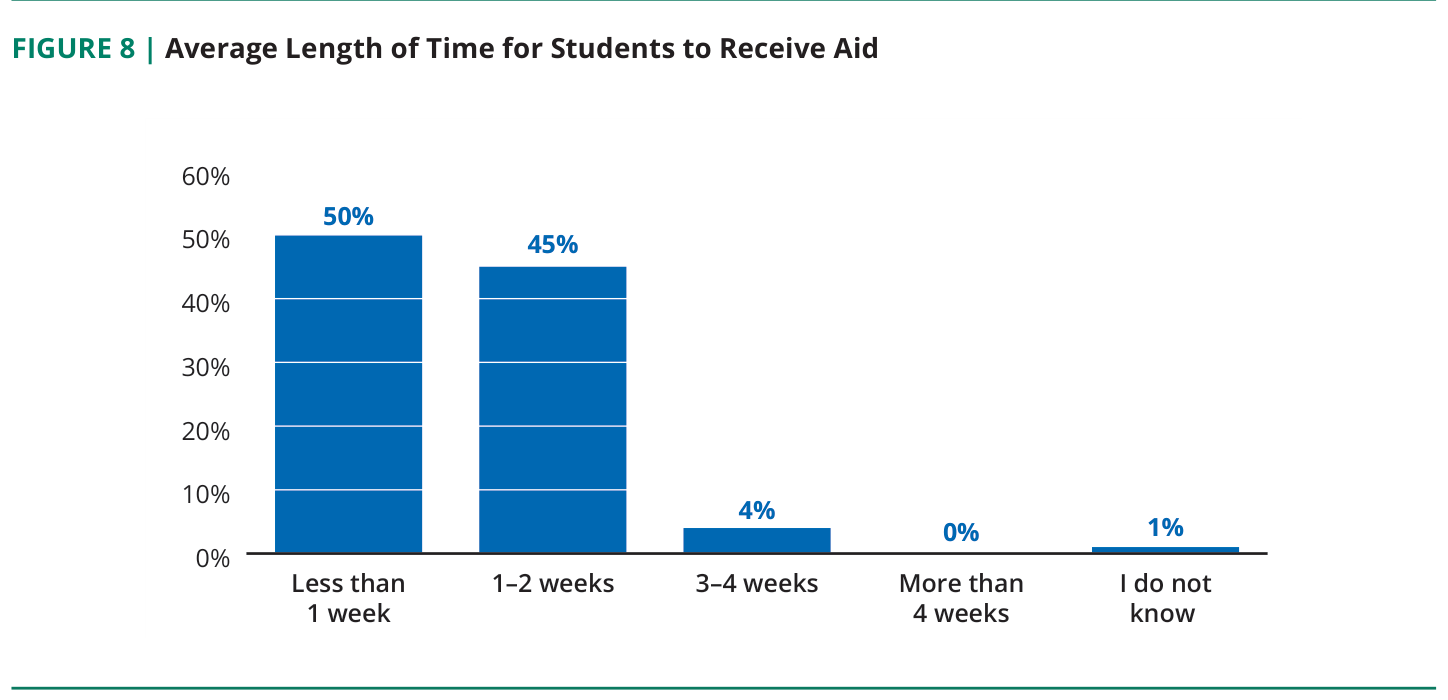
Half of programs distribute aid in less than a week, and 45% do so in one to two weeks.

Figure 8: Average length of time for students to receive aid
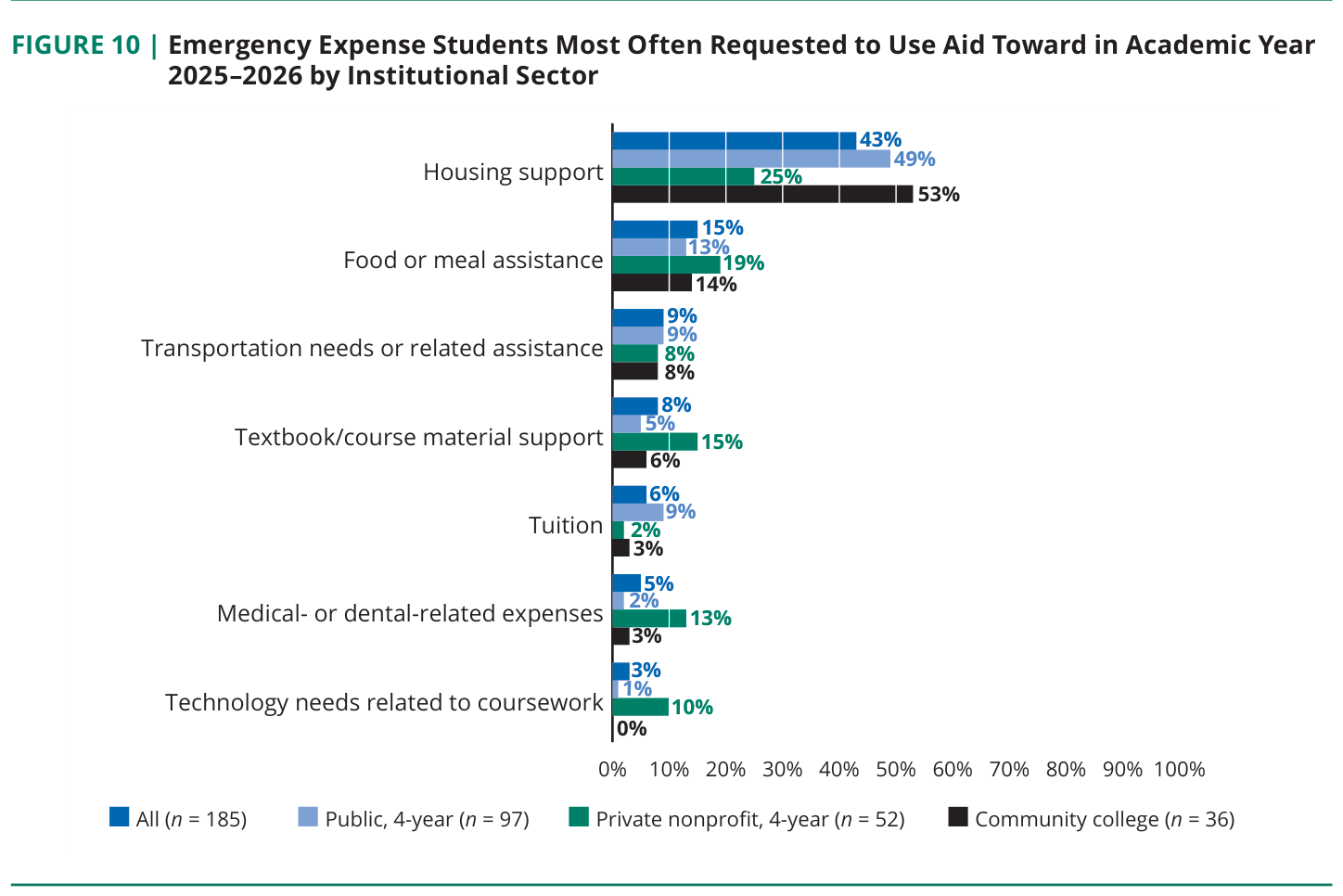
Figure 10: Emergency expense students most often requested to use aid toward in academic year 2025–2026, by institutional sector

Finding 05


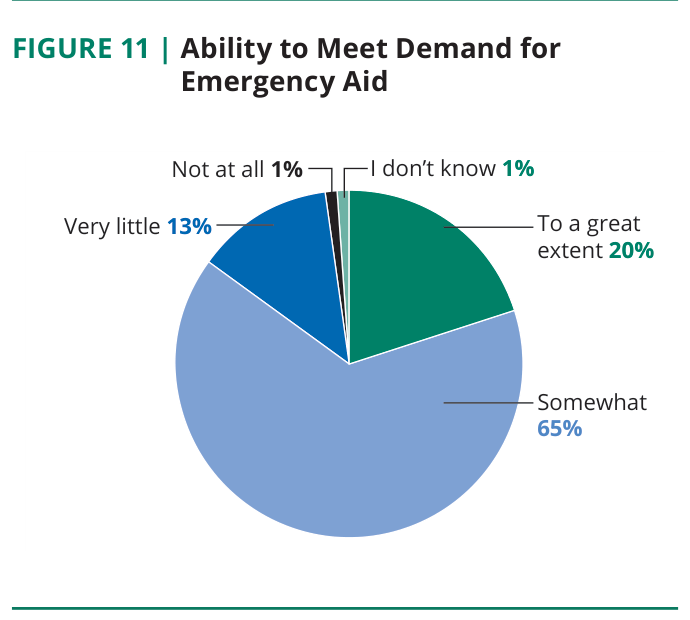
Only 20% of colleges are able to meet student demand for emergency aid “to a great extent.”

Figure 11: Ability to meet demand for emergency aid

Finding 06


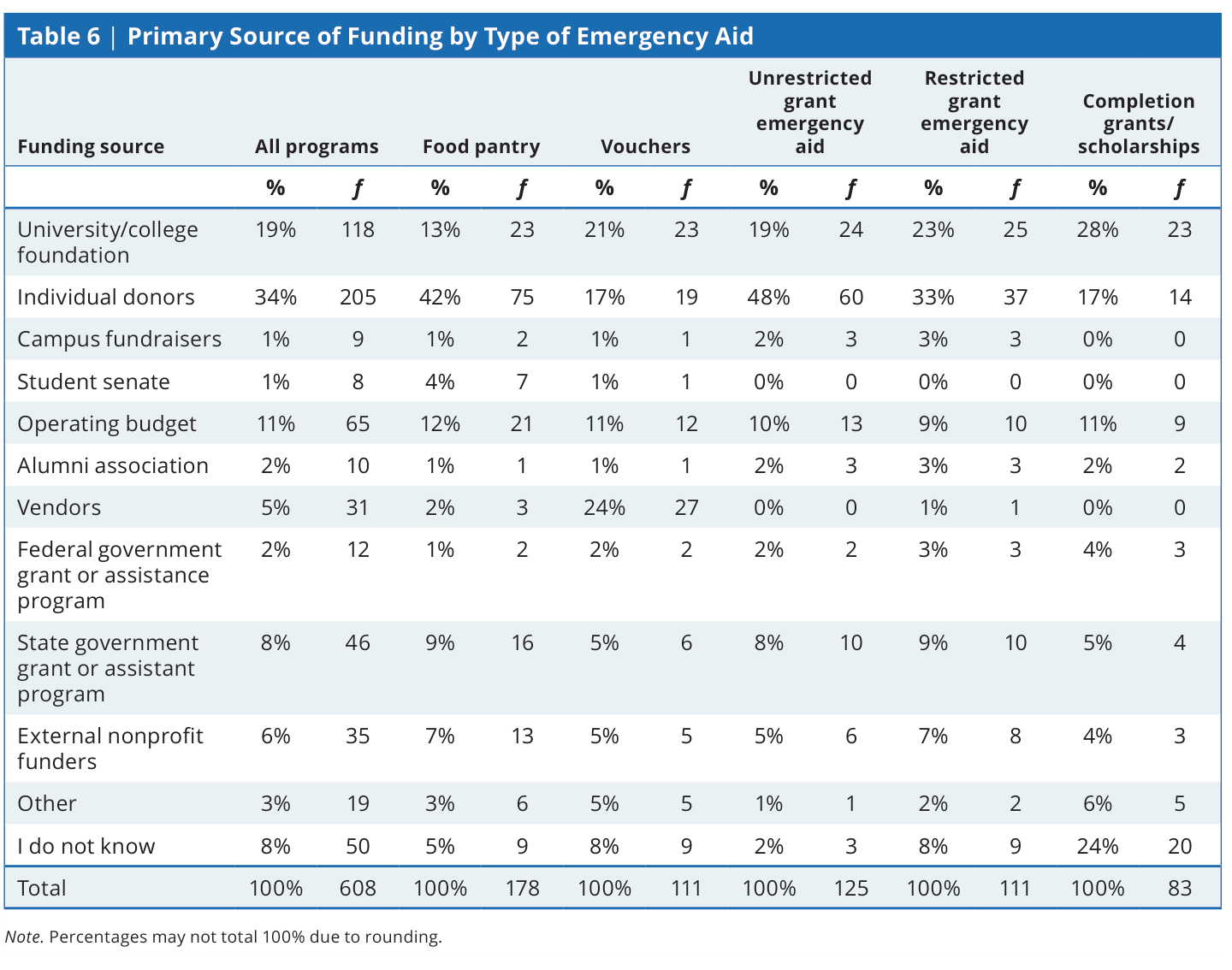
Individual donors are the primary funding source for 34% of reported emergency aid programs.

Table 6: Primary source of funding by type of emergency aid

Finding 07


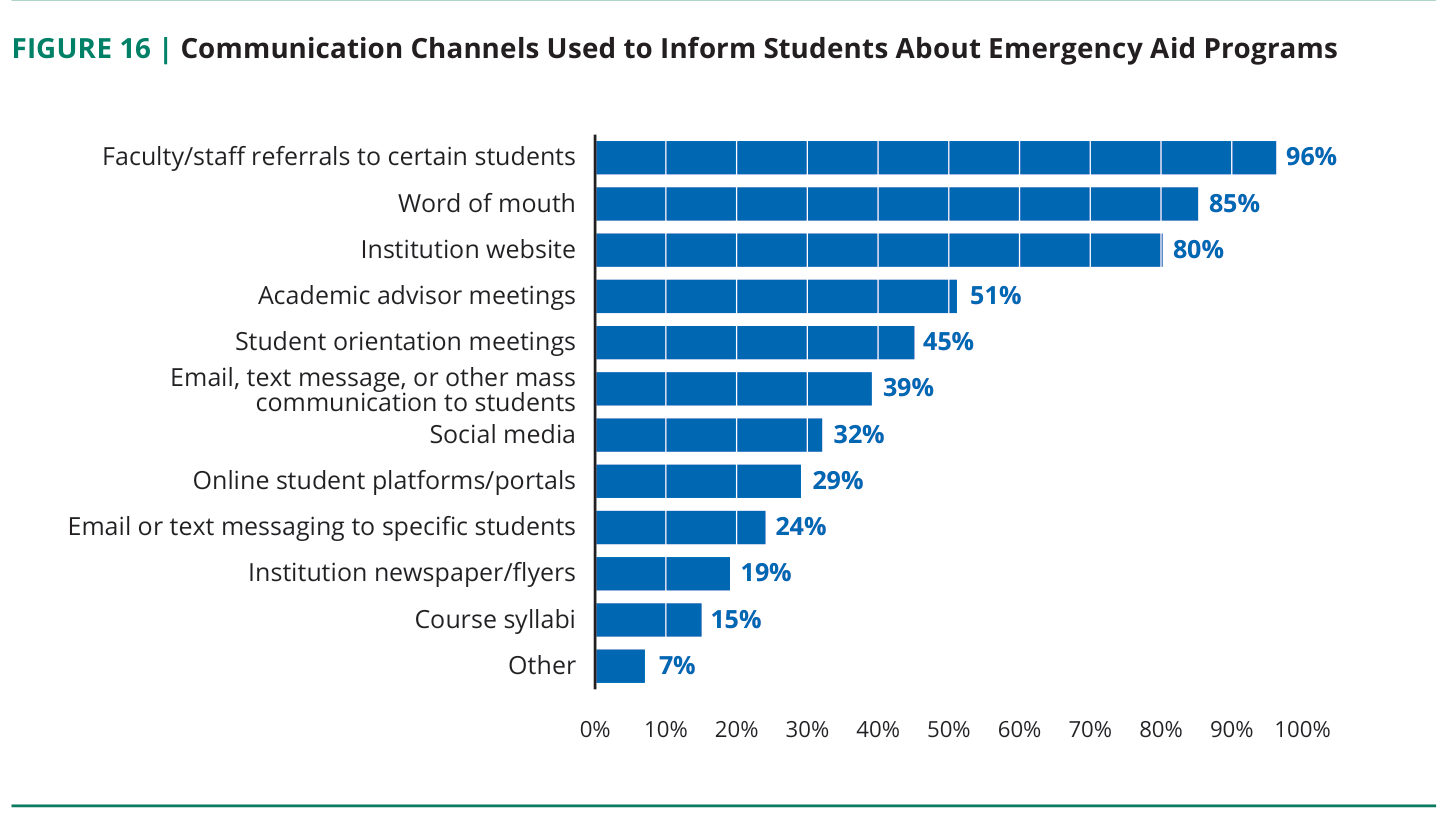
Faculty and staff referrals are the leading way emergency aid opportunities are communicated to students (96%).

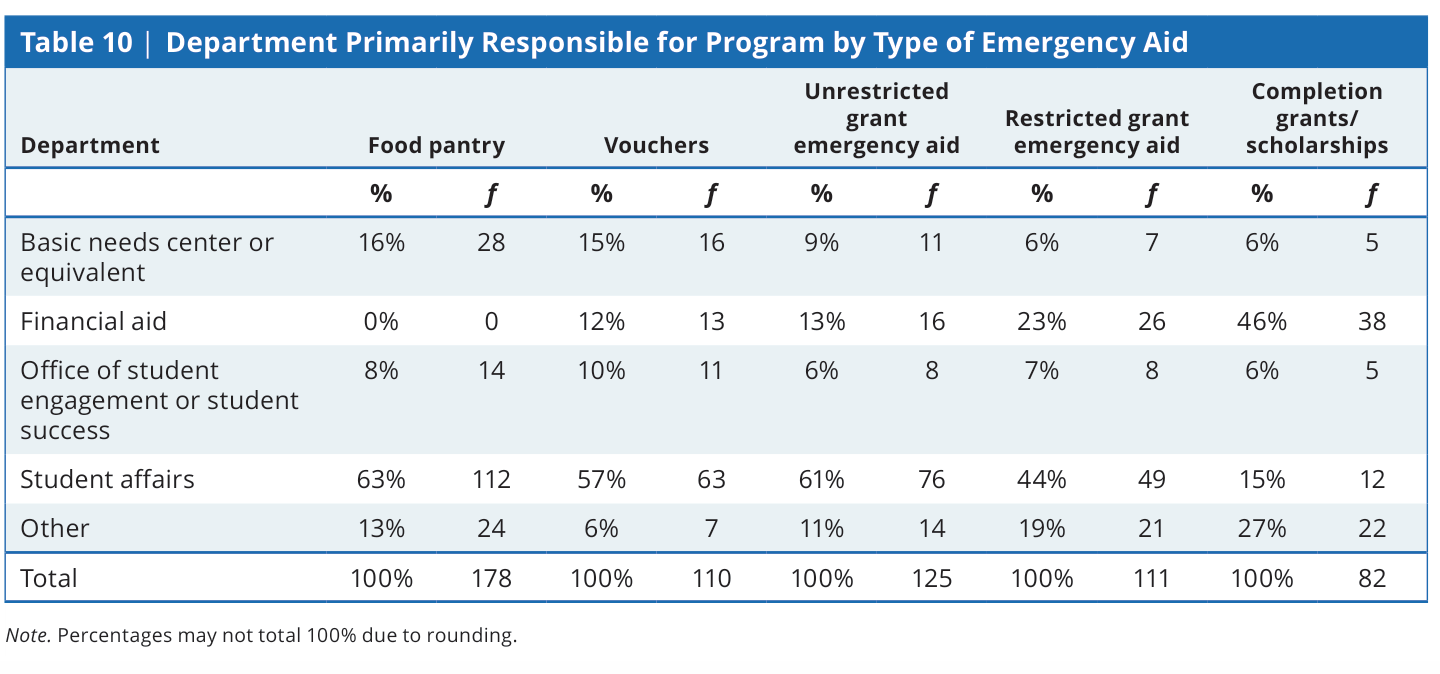
Table 10: Department primarily responsible for program by type of emergency aid
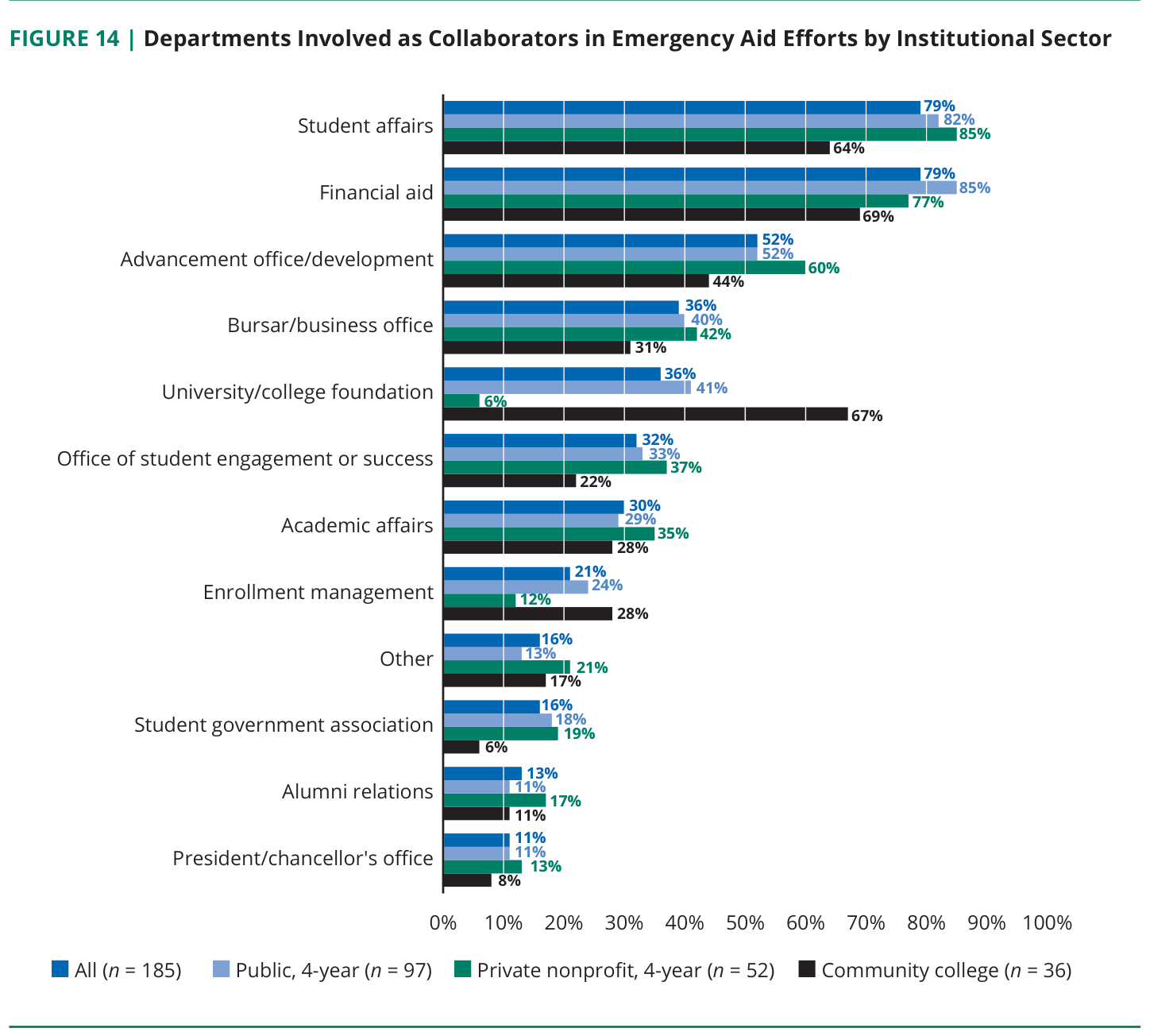
Figure 14: Departments involved as collaborators in emergency aid efforts by institutional sector
Figure 16: Communication channels used to inform students about emergency aid programs

Finding 08


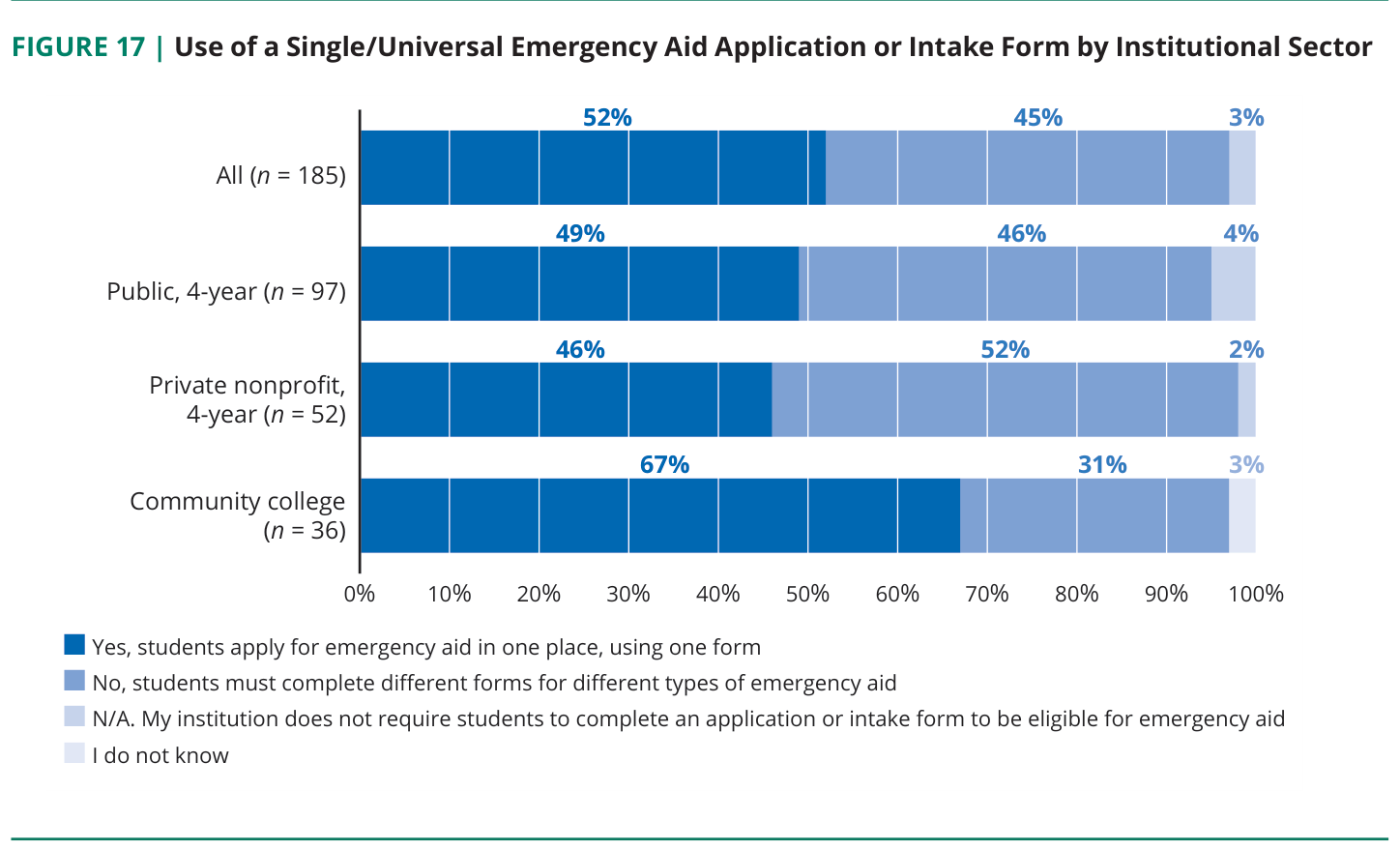
52% have a single emergency aid application or intake form for students to be considered for all emergency aid offerings.

Figure 17: Use of a single or universal emergency aid application or intake form by institutional sector

Finding 09


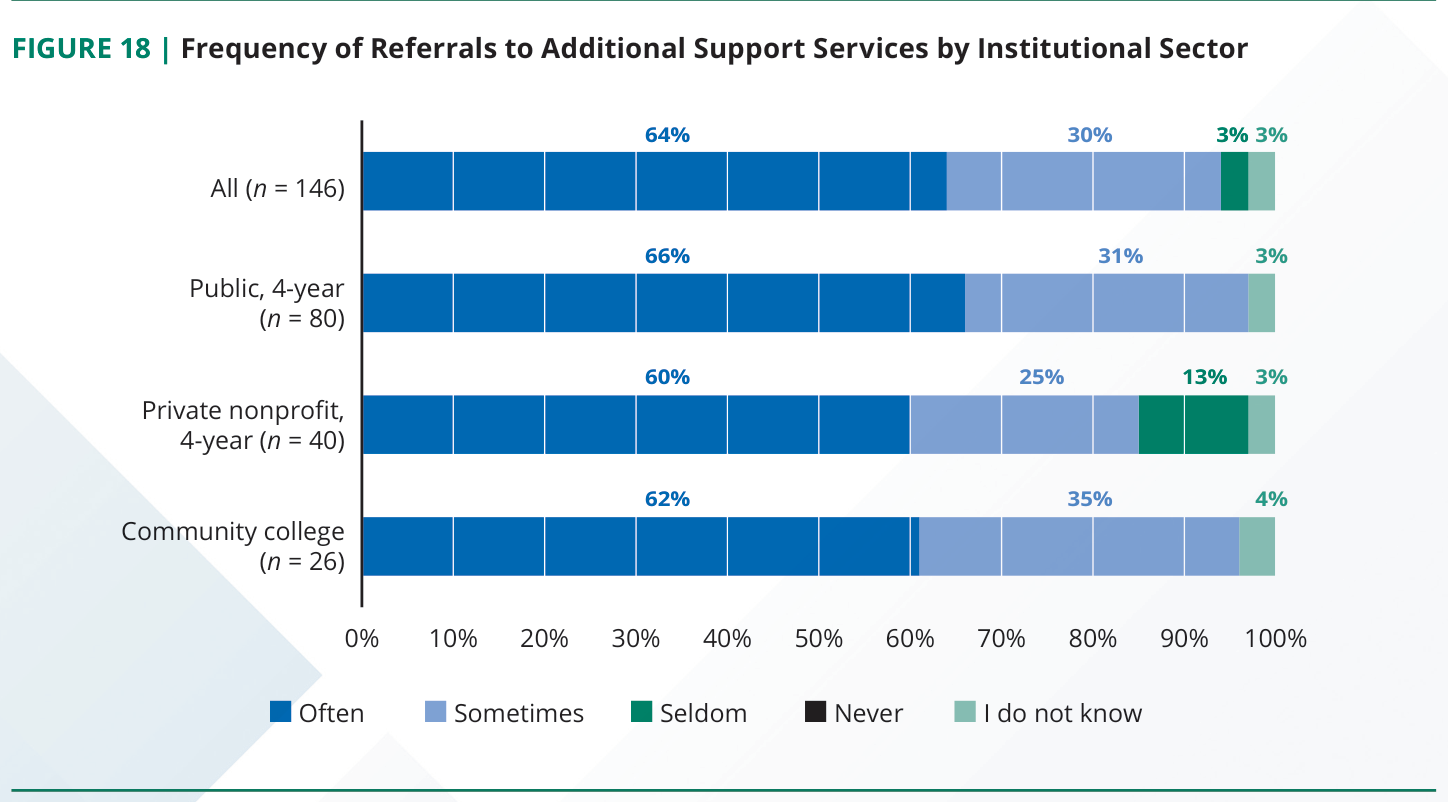
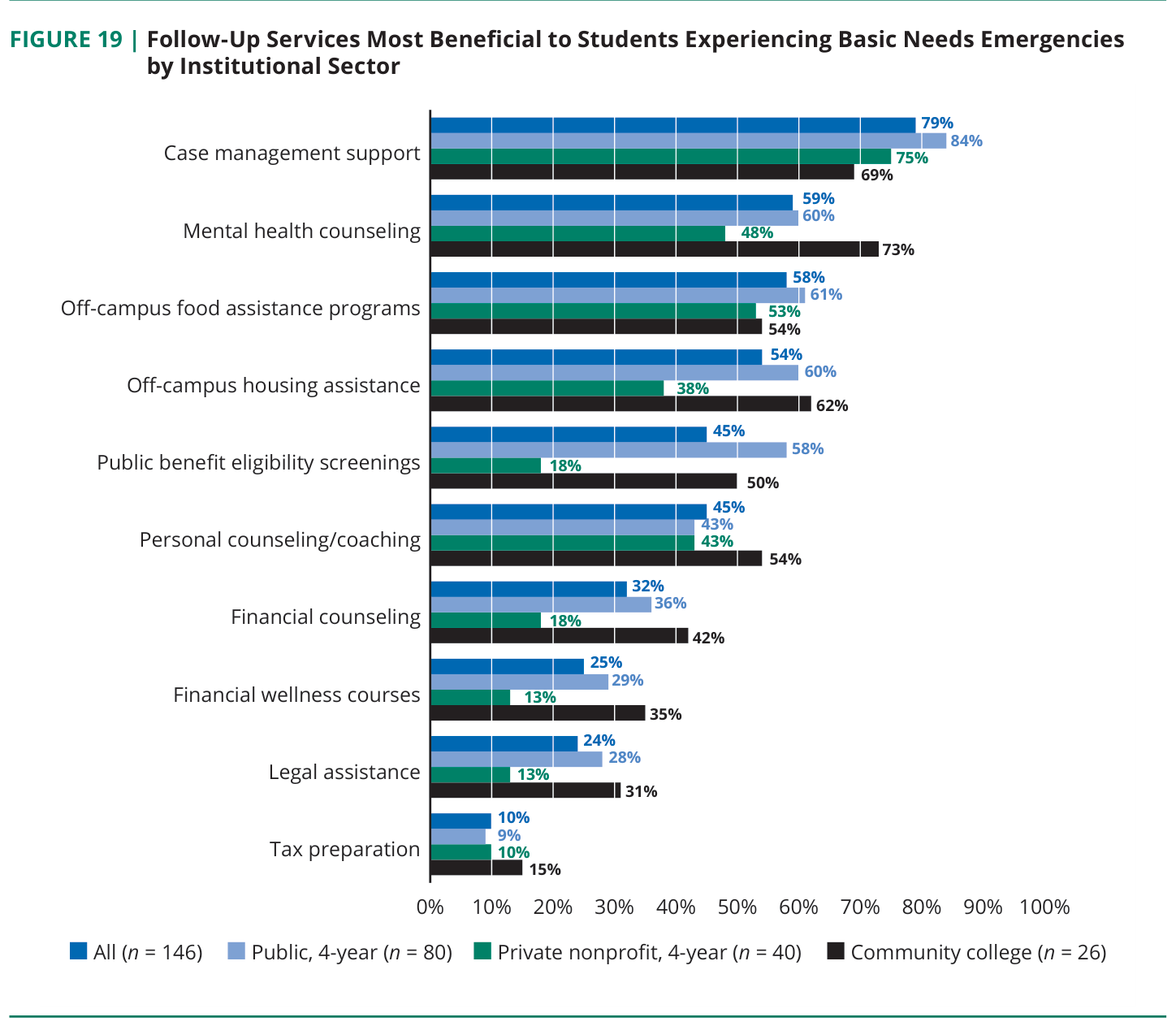
94% of colleges often or sometimes refer emergency aid recipients to additional support services.

Figure 18: Frequency of referrals to additional support services by institutional sector
Figure 19: Follow-up services most beneficial to students experiencing basic needs emergencies, by institutional sector

Finding 10


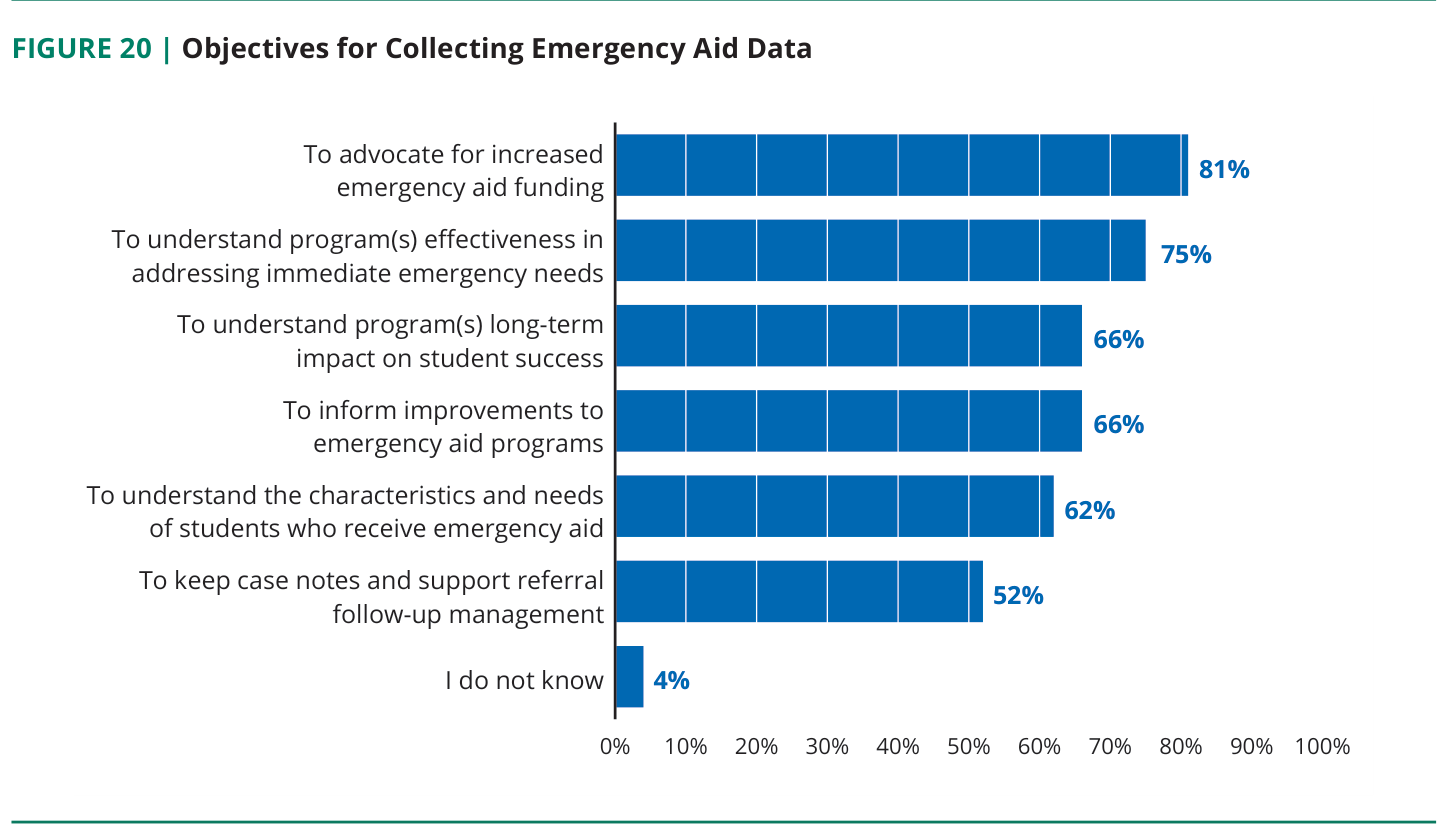
66% of institutions report collecting data on emergency aid to understand program(s) long-term impact on student success.

Figure 20: Objectives for collecting emergency aid data
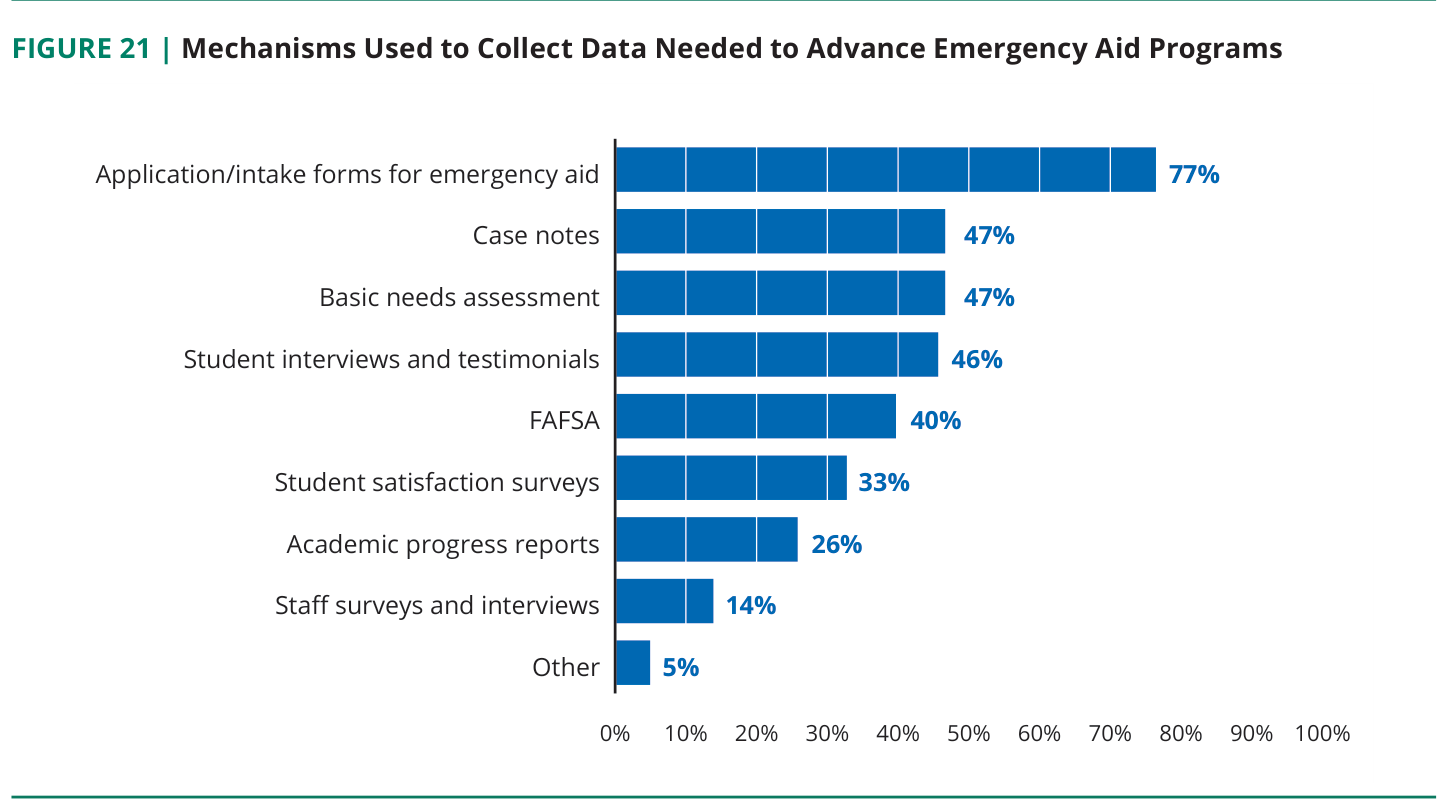
Figure 21: Mechanisms used to collect data needed to advance emergency aid programs

Contact

Please share any questions or feedback about this research with [email protected].

Related Resources