Scholar's Corner: Solidarity in the Valley
April 7, 2026
Solidarity in the Valley
The announcement of the cancellation and redistribution of $350 million worth of Minority Serving Institutions (MSI) discretionary funds by the U.S. Department of Education[1] brings a new wave of extreme budget cuts that affect students, staff, and faculty across the United States. Despite a notable 40% increase in the number of institutions who have qualified for a HSI designation from 2017 to 2024, the number of dual- and multi-designation eligible HSIs has increased by 95%.[2] Correspondingly, 1 in 5 HSIs now qualify for a second MSI designation.[3] For dual or multi designated institutions, the negative impacts of these discretionary funds deductions will be felt even greater. This calls into question what it means for institutions to truly serve students as racialized organizations,[4] regardless of these previously allocated funds. Garcia et al.’s (2019) conceptual framework of servingness depicts servingness moves from enrollment to providing culturally relevant services that engage students and support their success.[5] Even with the removal of discretionary funds institutions have a responsibility to constituents to properly practice servingness by addressing the needs of their diverse student populations.
For this paper we focus on Fresno State University, a dual MSI. Fresno State holds both an Asian American and Native American Pacific Islander-Serving Institution (AANAPISI)[6] and Hispanic Serving Institution (HSI) designation. A crucial implication of the federal funding cuts to AANAPISI and HSI institutions is directly tied to AANAPISI Initiatives at Fresno State University. These initiatives will be severely impacted and have begun transitioning some programs and responsibilities to other departments within Fresno State. It will, unfortunately, also be discontinuing a number of services such as the support for criminology students and peer mentoring that currently exist to support Asian American, Native Hawaiian, Pacific Islander, and Desi-American students.
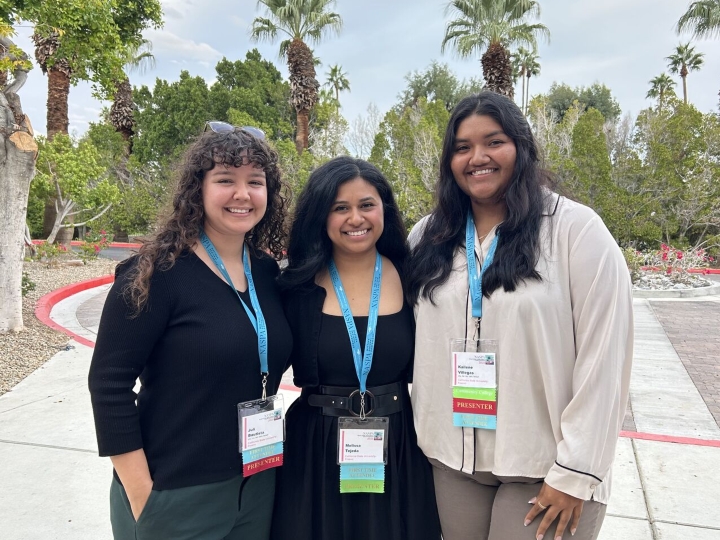
We enter this work as first-generation, women of color, practitioners in higher education who would like to live out our solidarity and true allyship. Our educational experiences within these organizations have allowed us to better understand the complexities of intersecting, marginalized identities, and how a lack of cultural relevance and cultural responsiveness operate within institutions. Often being the only one in the room being asked to provide input for whole communities without any support or acknowledgment. Although we greatly cherish our identities, we also recognize the importance of building capacity, studying diverse literature, and immersing ourselves in learning from folks who hold different intersecting identities from our own. Stating support for diversity is no longer enough, practitioners and institutions must take action to be well-rounded, empathetic supporters of diverse students and communities.
Background
The federal AANAPISI designation was created by congress in 2007 “to build the capacity of colleges and universities to serve AA&NHPI[1] [7] students.”[8] Designation resulted from many years of advocacy from the Asian American (AA) community, especially Southeast Asian Americans (SEAA) and Native Hawaiian and Pacific Islanders (NHPI). With the AANAPISI initiative being scaled back and responsibilities across other departments, Fresno State currently lacks sustained institutional efforts beyond the five-year initiative to fully meet the needs of the students this designation is meant to serve. There is a clear need to develop targeted programing structures within the institution, particularly within the functional area of Learning Assistance and Academic Support Services to intentionally support and uplift AANHPIDA students.
AANHPIDA students are often overlooked because of their ‘model minority’ status which eludes the assumption that they are not in need of institutional support programs like learning assistance. This negative stereotype reinforces that Asian Americans elude difficulties in cultural adjustments[9] and are thought to have “stellar educational achievement… overcam[ing] all barriers as a minority group.”[10] Even looking beyond the college setting, Asian Americans “continue to be misperceived as model minorities who achieve unparalleled and universal academic and occupational success.”[11] But this stereotype has grossly overlooked the students within the Asian community that could benefit from institutional support. Additionally, literature reveals institutional and sociocultural barriers, including a lack of culturally competent personnel and high levels of stigma surrounding help-seeking, significantly contribute to the negative experiences of AAPI[12] students.[13]
Due to aggregation, scholars and practitioners are unable to fully examine and service the needs of those AAPI students who are neglected in the shadows of persistent stereotypes about their academic abilities and financial positions.[14] By disaggregating AAPI data, research brings to light lower rates of college success among SEAA students.[15] Approximately 40% of AAPI college students in 4-year institutions earned a bachelor’s degree within 6-years.[16] Recent enrollment data from Fresno State show that Asian American and Native Hawaiian/Pacific Islander students consistently comprise just over 10% of the undergraduate population, approximately 11–12%, with Asian American students making up the vast majority of that group. When researchers disaggregate the data SEAAs specifically face drastic disparities compared to other group members.[17] Although commonalities and findings allow for transferability, it is important to remember that as a racial category Asian is an umbrella term that encompasses multiple ethnic groups. Within the AA racial category “Asian Indians (76%), Pakistani (55%), Korean (54%), and Chinese (52%) Americans hold bachelor’s degrees at rates higher than the national population (28%), their Vietnamese (26%), Hmong (14%), Cambodian (13%), and Laotian (12%) counterparts hold 4 year degrees at rates far lower than the national average.”[18] This data concurs that Asian American students “perform just as poorly as other minorities when schools do not come to their aid.”[19] Institutions have a responsibility to their students to support and aid their success. As practitioners in higher education, it is important to negate misconceptions because “normative frameworks unfairly, and often incorrectly, position AAPI students as the least in need of academic, financial, social, or psychological support,”[20] which is simply not true.
Theoretical Frameworks
The first framework we would like to highlight is the Critical Islands & Oceania Studies (CPIOS) framework, which seeks to move beyond the superficial inclusion of Native Hawaiian and Pacific Islander (NH/PI) communities by creating a justice-oriented, decolonial curriculum that centers their histories, knowledge, and lived experiences. Through three core units: History & Identity, Self-Determination & Sovereignty, and Disaggregation & Solidarity. CPIOS challenges the data aggregation and historical erasure that often occurs under umbrella terms like Asian Pacific Islander (API) or Asian Pacific Islander Desi American (APIDA). It highlights NH/PI resistance to colonization, their ongoing struggles for sovereignty, land, and cultural survival, and calls for intentional solidarity that accurately reflects their distinct realities. At its core, CPIOS is about decolonizing education by disrupting Eurocentric academic structures and instead fostering inclusive spaces, storytelling, and indigenous knowledge practices that honor the wisdom of Oceania. This framework embraces intersectionality, recognizing that students navigate layered identities of gender, race, and sexuality that shape their academic and personal experiences. Through collaborative workshops, guest speakers, and reflection activities like Navigating Multiple Identities, CPIOS encourages students to explore and empower these intersections. Grounded in both Critical Race Theory (CRT) and OceaniaCrit, CPIOS functions as a pedagogical bridge that reimagines justice and resistance through an Oceania lens, essential sources of theory, healing, and transformation.
The second framework we would like to highlight is the Culturally Engaging Campus Environments (CECE) Model. Through the implementation of the three selected indicators, we aim to foster a sense of belonging, motivation, and satisfaction while directly addressing gaps that have existed within tutoring programs. Why we focused on tutoring is because the $1.25million AANAPISI grant supports Asian American and Native American Pacific Islander students in criminology and forensic behavioral sciences and directly addresses gaps that have existed in tutoring programs.
The first indicator Cultural Familiarity[2] [3] [4] highlights the “extent to which college students have opportunities to physically connect with faculty, staff, and peers who understand their backgrounds and experiences.”[21] Thus organizations not only have the opportunity to connect with the students but can also facilitate an activity that will help them connect with one another. Second, Culturally Relevant Knowledge is the “degree to which students have opportunities to learn and exchange knowledge about their own cultural communities.”[22] We wanted to highlight a cultural and community based program where students come together to participate in activities such as: sharing circles which the CCGC could facilitate. We are trying to stray away from seeing AANHPIDA students as a monolith and instead embrace their individualized ethnic identities. In this way students have opportunities to learn and exchange knowledge about their own cultural communities. Third, Humanized Environments in which “institutional agents care about, are committed to, and develop meaningful relationships with students.”[23] Being in a learning center space may bring up negative emotions for students, so our program would make it easier if the CCGC could help facilitate that interaction between the two spaces.
There is a clear need to develop a targeted program within the functional area of Learning Assistance/ Academic Support Services that specifically supports and uplifts AANHPIDA students since this functional area directly benefits from the AANAPISI designation and latest tuition increase. The goal of our program is dedicated to empower AANHPIDA students by providing culturally responsive academic support that not only fosters academic success and confidence but also a sense of belonging.
Program Proposal
Returning to why we are interested in this work, we must build bridges and be in solidarity in order to sustain ourselves amidst ongoing DEI attacks. At Fresno State, our program proposal is grounded in the CPIOS and CECE frameworks, and would be housed in the Fresno State Learning Center. They would host a cultural academic study session (CASS), which will have a targeted approach for reaching students who have Asian American, Native Hawaiian, Pacific Islander or related identities. CASS events will occur two times a month, throughout the academic year. The three hour programming will consist of connecting and engaging with one another and participating in a mini academic workshop, while bridging the gap between services and cultural affinity.
The first day of programming will be dedicated to inviting organizations and clubs (i.e. Amerasia Organization, Friends of AAPIC, Hmong American Ink & Stories, Society of Asian Scientists and Engineers) to the tutoring center with a dedicated event. The first hour would consist of organization introductions and hosting a culturally relevant activity for students to have the opportunity to connect and engage with one another, allowing for expressive creativity.
The second day of programming would involve collaboration with theFresno State Cross-Cultural Gender Center (CCGC) to bridge the gap between services and cultural affinity. The first hour would consist of an introduction by CCGC and the tutoring center, followed by a spotlight topic or mini-workshop. Examples include: ‘Finding your voice in Academia’, ‘Wellness and Studying Through a Cultural Lens,’ and ‘Decolonizing Success: What Achievement Means to Us.’ This session could be an open dialogue, panel, or interactive workshop led by CCGC staff or community members.
The last two hours of both programs will utilize the tutoring division of the Learning Center, and include academic and tutoring based programming where snacks would be provided and students could opt for either structured tutoring from student tutors or informal study jam.
This would differ from what is currently being offered through the Tutoring Center because the current model relies on students to come to the Learning Center to seek support, with no consistent form of cultural responsiveness, hence hindering direct outreach. Embedding our program within the existing Tutoring Center establishes clear institutional responsibility to invest in equitable infrastructure and ongoing funding necessary to ensure its long-term effectiveness and sustainability.
The goal of our program is dedicated to empower AANHPI students by providing culturally responsive academic support that not only fosters academic success and confidence but also a sense of belonging. Through the CASS programing, we aim to enhance student learning, retention, and overall well-being. We hope to target and address the unique challenges that AANHPI students face in higher education.
Furthering the conversation
This is a call to action. We acknowledge that not all institutions have an AANAPISI designation or properly recognize AANHPIDA student groups, however higher education institutions have a fundamental responsibility to serve these communities even if there is only a small percentage of students in attendance. We invite practitioners to understand why these myths and assumptions can be harmful as they hinder the support students need. We also invite non-AANHPIDA practitioners to engage in advocacy, solidarity, and actionable allyship. In doing so we can shift from deficit minded practices to holistic approaches that center students' identities, thus creating a better sense of belonging and academic support for all AANHPIDA students.
While wanting to incorporate these frameworks, we also recognize their limitations. If Minority-Serving Institutions designations were to disappear, the responsibility to support historically marginalized students would not. Institutions must still commit to equitable practices, intentional outreach, and authentic inclusion. These designations should not be symbolic but rather a catalyst for meaningful and sustained institutional change.
[1] See U.S. Department of Education ends funding to racially discriminatory discretionary grant programs at minority-serving institutions (2025, September 10) for more information.
[2] See Espinoza & Aguilar-Smith, 2025, p. 1; Nguyen et al., 2023; U.S. Dept., 2024 for more information.
[3] See Espinoza & Aguilar-Smith, 2025, p. 1 for more information.
[4] See Espinoza & Aguilar-Smith, 2025, p. 2 for more information.
[5] See Garcia et al., 2019 for more information.
[6] Based on the body of literature we define Asian American and Native American Pacific Islander-Serving Institution (AANAPISI) but will be referring to Asian American (AA), Native Hawaiian (NH), Pacific Islander (PI), Desi-American (DA), Southeast Asian American (SEAA).
[7]Although the AANAPISI designation includes Native American (NA) students, we will not be referring to or addressing this specific student group.
[8] See Nguyen 2025, p. 240 for more information.
[9] See Sue & Sue, 2003; Shea & Yeh, 2008; Teranishi et al., 2009 for more information.
[10] See Teranishi et al., 2009, p. 57 for more information.
[11] See Museus et al., 2016, p. 486 for more information.
[12]Asian American Pacific Islander (AAPI) is an iteration of AANHPIDA and was used to accurately refer to the literature used in this section.
[13] See Shea & Yeh, 2008; Teranishi et al., 2009 for more information.
[14] See Teranishi et al., 2009, p. 62 for more information.
[15] See Museus et al., 2016, p. 485 for more information.
[16] See NCES 2013 for more information.
[17] See Museus et al., 2016, p. 485 for more information.
[18] See Museus, 2013a; Museus et al., 2016, p. 485 for more information.
[19] See Yu, 2006, p. 330 for more information.
[20] See Teranishi et al., 2009, p. 65 for more information.
[21] See Museus, Yi, & Saelua, 2018, p. 469 for more information.
[22] See Museus, Yi, & Saelua, 2018, p. 469 for more information.
[23] See Museus, Yi, & Saelua, 2018, p. 469 for more information.