June 15, 2026
Call for Programs Opens
September 23, 2026
Call for Programs Closes
October 1, 2026
Registration Opens
October 1, 2026
Hotel Accommodations Open Online
2027 NASPA International Symposium
Division/Group Events Place-Based Student Success Supporting the Profession Global Division International Education VP for Student Affairs AVP or "Number Two" Senior Level Mid-Level Faculty New Professional Graduate Undergraduate
March 6 - March 7, 2027 National Harbor, MD
A Pre-Con at the NASPA Annual Conference
The NASPA International Symposium facilitates the advancement of global discussion and worldwide understanding of student affairs and services. The International Symposium seeks to inspire and explore new perspectives, and to create new connections to bridge international boundaries. In doing so, the International Symposium expands NASPA's objective of providing professional learning opportunities to support preparedness for the realities of an increasingly globalized society. The Symposium is designed for anyone whose work touches global student affairs and services, whether that is as a practitioner, scholar, interculturalist, or institutional partner, and equally welcomes those returning each year and those joining for the first time.
The world our students are preparing to graduate into is changing faster than our institutions, and the conditions of work, study, meaning-making, and community are shifting in ways that compound and interact. The 2027 NASPA International Symposium invites student affairs educators and practitioners from around the world to engage with challenges we currently face and a forward-looking question: what do students graduating in 2030 (and beyond) need to be prepared for, and what are we designing today to get them there?
Presented By
About the NASPA International Symposium
The NASPA International Symposium is a specialized preconference of the NASPA Annual Conference that brings together student affairs professionals, educators, administrators, and students from various countries to discuss and address issues pertinent to higher education and student services globally. The primary mission is to foster a global community of practice that enhances the effectiveness of student affairs professionals, enriches educational environments, and supports the holistic development of students worldwide. The event format will include keynote presentations and workshops, concurrent sessions, interactive discussions, and networking opportunities.
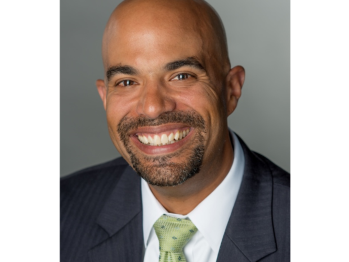
Message from the Chair
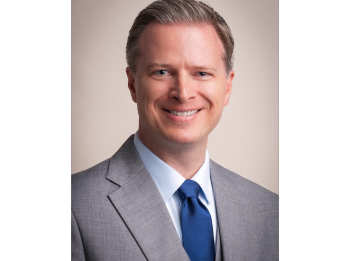
Christopher Van Velzer
The NASPA International Symposium is a preconference unlike most. It is more intimate than the NASPA Annual Conference by design, and that is part of what makes it valuable: a two-day gathering of practitioners and scholars from across the world who share an orientation toward student affairs and services work in diverse national, regional, and cultural contexts – both within and outside of the United States. That shared orientation produces conversations you will not easily find at a larger conference, and connections with colleagues from around the world that tend to last.
On behalf of the planning committee, I want to invite you to join us just ahead of the NASPA Annual Conference. We welcome our returning community of colleagues, whose continuity makes the Symposium what it is, and we are equally committed to connecting with those who are newer to the field or attending for the first time. If your work touches global student development and student support in any way, this is a space designed for you. That includes student affairs and services professionals working internationally, those in study abroad and international education, interculturalists, faculty and scholars whose work engages student development across borders, US-based institutions serving significant international student populations, and internationally based institutions serving both domestic and international students.
I hope you will consider submitting a proposal. The Symposium is an opportunity to share what you are learning with colleagues who bring globally distinct vantage points, and to receive the same in return. If you have not yet registered for the Annual Conference, we hope you will consider arriving a few days early to join us.
Please reach out with questions or suggestions. The planning committee and I look forward to seeing you there!
Symposium Planning Committee
The 2027 NASPA Symposium Planning Committee (SPC) is responsible for supporting the creation and execution of the conference experience by leveraging their expertise and lens. NASPA is grateful to the thoughtful and intentional volunteers listed below.
Jad Abdallah, Lebanese American University
Kruti Chaliawala, Boise State University
Pantelis Chantzaras, Perottis College/American Farm School
Darren Clarke, Rutgers University
Wadad El Housseini, Qatar University
Tanya Francis, University of the West Indies
Miriam Khalil, Northwestern University in Qatar
Art Malloy, University of North Dakota
Russell Martin, Franklin University Switzerland
Gemma MacNally, University of Galway
Kerrie Montgomery Orozco, University of Florida
Pilar Murguia, John Cabot University
Tracy Nakajima, East Texas A&M University
Ahmed Osman, The City University of New York
Janelle Rahyns, NASPA
Paul Rossi, University of the Arts London
Aray Saniyazova, Nazarbayev University
Jayme Scally, West Virginia University
Vickie Unferth, Marshalltown Community College
Christopher Michael Van Velzer, Duke Kunshan University
Yanmei Zhang, Georgia Institute of Technology
Call for Programs - OPEN
Please Note: You can register for the 2027 NASPA International Symposium as a stand-alone event. You do not have to also register for the 2027 NASPA Annual Conference.
There will not be any virtual presentation opportunities.
SUCCESSFUL PROPOSALS
Program reviewers rely on a well-written description to enhance their understanding of the content and goals of the presentation. The conference planning committees encourage program proposals with proven practices and content that will engage participants in fruitful discussions and provide meaningful content to bring back to their campuses.
Successful proposals should include:
- Lengthy description about session content that you will present.
- Relationship of the program to the conference themes outlined below in 'Conference Themes & Learning Outcomes'
- Identification of the program format (e.g., lecture, panel, roundtable) including methods for participant involvement (e.g., discussion, effective practice sharing, case study analysis).
- Discussions of replicability: to what extent can the information presented in this program be replicated at other institutions?
- Evidence of the conceptual foundation for proposal content including ways the program content is grounded in research, relevant experience, a cogent model, or appropriate theory.
- Program proposals should establish a clear connection to the research, framework, model, or theory included in their discussions.
- A list of references to relevant research, models, or theory must be listed in the "References" section.
Tips:
- Draft and save your work in a word processing program to ensure you keep a copy for your records. When you are ready, copy and paste the your description and outline into the text box below.
- There are no word limits on this section. Please provide enough details so that program reviewers can understand the breadth, depth, and scope of your program. This description will not be printed in the program book, website, or otherwise.
- Ensure correct spelling and grammar.
For additional tips, please visit NASPA’s Program Submission Guidelines
Symposium Tracks
Global and Cross-Cultural Perspectives to Reimagine the Role of Student Affairs & Services
Student Affairs does not look the same everywhere, and the futures our students are entering vary significantly by national, regional, and cultural contexts. Practitioners similarly face varied challenges to their own development and well-being. Sessions in this track present global perspectives from institutions across different systems, exploring how varied political, educational, legal, and cultural environments shape the work of student development and support.
Graduate Readiness and the Future of Work
What are we preparing students for, and how do we know? Sessions in this track examine what competencies are expected in students when they leave us and how approaches to student development should adapt to a post-graduation landscape that is shifting mid-development, including the evolving nature of work, the role of experiential learning and entrepreneurship, and the relational and cultural competencies students need to thrive.
Well-being, Mental Health, and the Changing Inner Life of Students
Student mental health is not only a service question; it is a design question. Leveraging different global models, sessions in this track explore: how the emotional, psychological, and social landscape of student life is shifting; what new pressures and vulnerabilities students bring; and, what effective support, prevention, and community-building look like in response.
Symposium Registration and Hotel Accommodations
To register for the NASPA International Symposium, visit 2027 NASPA Annual Conference and you will be redirected to the official 2027 NASPA Annual Conference page where you will find registration and hotel accommodations information.