SAPAA Spotlights: Community Award Winners, Dr. Melinda Stoops & UMBC's Academic Success Center
April 2, 2026
Every year, the Student Affairs Partnering with Academic Affairs Knowledge Community recognizes those working within the communtiy with two awards. The Christopher A. Lewis Distinguished Service Award is presented to a SAPAA member who is committed to the mission, vision, and goals of SAPAA, while the Promising Practices in Student Affairs and Academic Affairs Collaboration Award is presented to a program or service that has contributed to collaboration or integration of student and academic affairs in a college or university setting.
SAPAA honored this year's awardees at NASPA's Annual Conference in March 2026. We've asked both awardees to share a little more about themselves, what they're proud of, and what they're excited about right now. More information on both awards can be found on the SAPAA webpage here.
Christopher A. Lewis Distinguished Service Awardee: Dr. Melinda Stoops
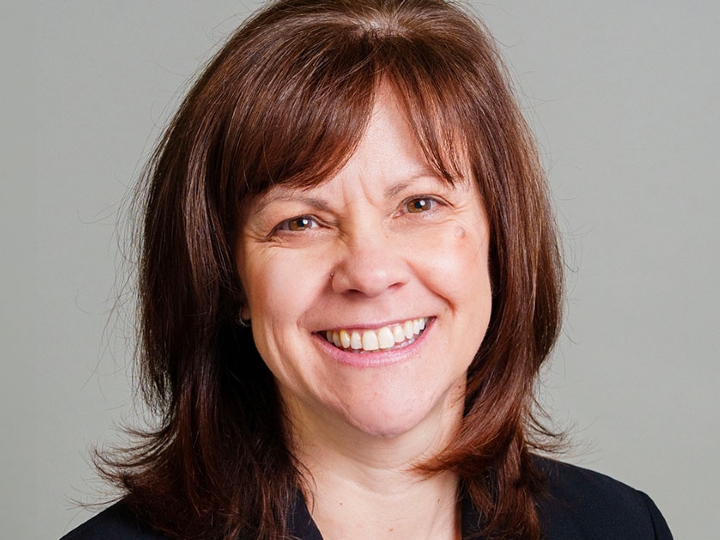
Dr. Melinda Stoops has over twenty years of experience in higher education, and in that time has served at the intersection of student and academic affairs in many capacities. From her start at a state university counseling center, to the work she would eventually do there as dean of students/associate vice president for student affairs, to work as an associate vice president for student health and wellness at a private institution, and more. Among her many honors, Dr. Stoops was recognized as a NASPA Pillar of the Profession in 2024 and has served as a Co-Chair of the Student Affairs Partnering with Academic Affairs from 2023-2025. Her continued her work in this community as a mentor and support shines through in the insights she's shared here.
Q: "Student affairs partnering with academic affairs" can be incredibly broad. We started by asking Dr. Stoops what this has meant for her - what it has meant in her work and where she's seen herself inside that partnership.
Dr. Stoops' answer: In broad terms, "student affairs partnering with academic affairs" is really about collaboration. Higher education segments different functional areas into distinct divisions, which makes sense, give the large number of functions and stakeholders. However, divisions don't have to serve as true divisions, in terms of the work we do. There are so many ways in which the work of academic affairs and student affairs intersects that it makes sense to connect on that work - both formally and informally. In my work, as noted above, there have certainly been formal (i.e., role-related) points of collaboration, such as when I managed the academic policies or co-administered a group of seminar courses. However, it also involves less formalized interactions, such as conversations about a student of concern, inviting individuals from academic affairs to participate in a focus group about student well-being, or asking for representatives from academic affairs to participate in a specific initiative.
Q: Looking back: What is something you're proudest of?
Dr. Stoops' answer: When I served as associate vice president for student health and wellness, I worked with my team to develop a strategic plan for that area. One of the four goals focused on collaboration across campus on well-being efforts. As part of that goal, we held several focus groups with people across campus (including people from academic affairs) to get a better sense of their perspective on student well-being. We then created a Wellness Collaborative of wellness champions from across campus. This involved faculty and staff from multiple divisions and academic affairs was well-represented with multiple faculty, several deans, and someone from the Provost's Office. I was most excited in one meeting when an academic dean announced he was planning a week of stress-reduction activities for his students. I loved the fact that he and his colleagues viewed this well-being initiative as part of their work!
Q: Looking forward: What are you most excited about as you move forward right now?
Dr. Stoops' answer: That's a big question. I've been involved in several recent projects with a local community college that have been really rewarding: a half day retreat for an enrollment management division and several cohort-based supervision workshops. I'm also doing some work with a national group to respond to workplaces that are dealing with a disruptive event of some type - basically, I serve on-site and provide support to people exposed to a traumatic or other type of distressing event. This allows me to use my skills as a psychologist to support teams during really difficult times. I have missed being on a college campus and am currently looking at opportunities to return to a campus-based role for the upcoming academic year.
Q: Looking around: What is one thing you feel everyone who cares about Student Affairs Partnering With Academic Affairs should be looking at?
Dr. Stoops' answer: One strength of the SAPAA KC is the quantity and quality of its offerings to NASPA members. There are several LinkedIn groups associated with SAPAA, which provide a great opportunity to connect with others on this work. There is also typically a webinar offered each month on a topic related to partnerships between student affairs and academic affairs. The webinars, in particular, provide insight into great work being done in this area at campuses - and they are free. I've enjoyed attending these to not only learn more, but to make connections with the presenters and others in attendance.
But wait, there's more: when asked if there's anything else she'd like to share, Dr. Stoops emphasized just how active it's possible to be in the SAPAA community. "As someone who has served as co-chair of SAPAA, I know that the SAPAA leadership is always looking to connect with people who are interested in getting involved in this KC. There are different ways to be involved - whether serving on the leadership team, reaching out to the leadership team about presenting at a monthly webinar, or nominating someone for the SAPAA KC awards. There is basically something for everyone, in terms of level of involvement."
For more insights from Dr. Stoops, you can check out her active LinkedIn profile and her website https://www.melindastoops.com.
Promising Practices in Student Affairs and Academic Affairs Collaboration Awardee: UMBC's Academic Success Center
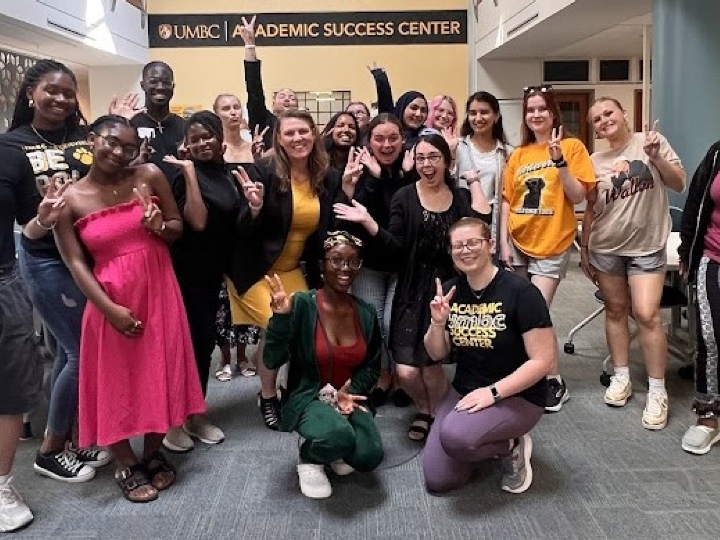
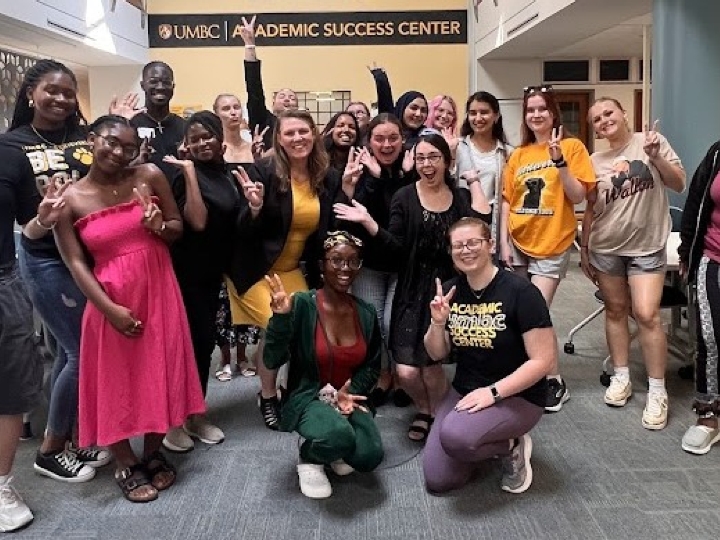
In the words of its founder and leader, Dr. Amanda Knapp, The Academic Success Center at University of Maryland, Baltimore County (ASC at UMBC) is a centralized "one-stop shop" resource for undergaduate students to find the help they need. While the ASC is designed to be one stop for students, it is built on partnership among many campus academic- and student-focused units to provide the students it serves with a coordinated approach towards their success. With an internationally recognized standard of excellence, an emphasis on Academic Advocacy, and a mission that centers using cross-campus collaboration and skill-development to help students reach their individual goals, the ASC goes above and beyond in its approach to working with students. Dr. Knapp serves as UMBC's Associate Vice Provost and Assistant Dean, and shared with us some of her insights into what makes the ASC so special.
Q: What does "student affairs partnering with academic affairs" mean for the ASC? What has it meant in your work, and where do you see yourself inside that partnership?
Dr. Knapp's philosophy on the partnership between academic and student affairs is not to think about it as a partnership at all. "It's not about collaboration, it's about integration," she shared, highlighting the inseperability between academic progress and student well-being, and speaking of "elimintating that artificial divide." When the concept of the ASC emerged in 2019, the goal was to try something different and innovative - this meant looking at students from a holistic place of care. Coordinating between different units for the ASC doesn't mean partnering between distinct entities, it's responsibility towards a shared goal.
What does that look like? "Constant communication," Dr. Knapp says. The ASC takes care to communicate between campus units to avoid duplicated efforts or sending mixed messages. This is a place where the ASC's Academic Advocacy model is vital, providing students with an advocate who can facilitate that communication for any given student concern. So it's no surprise that...
Q: Looking back at what the ASC up until now: What is something you're proudest of?
...Dr. Knapp's quick to highlight her pride in the institution and growth of the Academic Advocacy model! Academic Advocates serve as "pro-active, personalized, coordinated care" to help students make connections and sort out issues that cross through personal, academic, and financial complexities. Advocates, Dr. Knapp says, "embody everything we do in the academic success space." Since the inception of the ASC, they've been able to implement these advocates and connections across UMBC, build a case management system to facilitate their success, and build strong relationships among faculty, staff, students. Here, Dr. Knapp emphasizes the trust they've been able to build: units across campus trust that if the ASC and their advocates are working with a student, "everyone who needs to be will be involved" and will share in the updates, data, and best practices that the ASC is able to identify and track through their work.
Q: How about challenges?
This one was tough for Dr. Knapp to answer, because she knew from the start that the design of the ASC needed to include buy-in across campus, and built achieving it into the development of the center. "We had all the parts and pieces, just weren't coordinating well," she shares, and gives examples of conversations they had around nomenclature, from a shared definition of "what is care?" to clarifications on how "academic advocates" are distinct from "academic advisors." Dr. Knapp was clear that resolving these questions was a shared load, not just the ASC's purview, and ties that mentality back to the ASC's success: "[the Promising Practices award is] not just the ASC's award, it's everyone's award."
Q: Looking forward: What are you most excited about as the ASC moves forward?
"This is a really exciting time," Dr. Knapp says. Between newer leadership at UMBC and current strategic planning initiatives, there are lots of opportunities to make coordinated plans. Dr. Knapp is particularly excited to think about a currently very decentralized advising model and how to centralize it with an eye towards a single, high standard of care.
Q: Looking around: What is one thing you feel everyone who cares about Student Affairs Partnering With Academic Affairs should be looking at?
For Dr. Knapp, this comes back to the vitality of working with students as people. Students' lives, she notes, are immensely complex - while it can be easy to focus on new and exciting quantitative data, "it's the human aspect we cannot lose." This means looking to programs like the ASC and other similar centers that it took inspiration from (she mentioned University of South Florida's work, and resources she's helped inform at University of Central Florida and Florida Gulf Coast University) and thinking about both how to adapt those models to the idiosyncracies of your particular campus and how to pay that knowledge forward. "It extends beyond the institution," she says, "if you care about student success, it extends beyond your campus."
You can read more about the ASC in its most recent public annual report and about Dr. Knapp on the ASC's website here.
More information on both the SAPAA community awards can be found on our webpage here. Nominations are typically due in October.